Thursday, July 11, 2013

New U.S. Investor for Air Cargo Germany?

Air Cargo Germany, which suspended operations April 18, has received interest from an unidentified American investor, several German media outlets have confirmed. The carrier declared insolvency the same month.

Air Cargo Germany CEO Michael Schaecher said in an earlier statement that management and shareholders want to restructure the company and restore operations.

Two of its four grounded Boeing 747-400SFs have been transferred from Frankfurt to Hahn Airport for maintenance—a possible sign it is renewing flights. The two aircraft, leased from Iceland-based Avion Aircraft Trading, had been parked at the deicing area close to runway West in Frankfurt. The other two aircraft have been returned to owner Martinair.

It is unclear if negotiations with current single major shareholder Air Bridge Cargo, a Volga-Dnepr Airlines subsidiary, will be successful.

Air Cargo Germany could not immediately be reached for comment.

(Kurt Hofmann - ATWOnline News)

Silk Way Airlines to add 747-8F to fleet

(Boeing)

Azerbaijan, Baku-based cargo carrier Silk Way Airlines has ordered two Boeing 747-8 freighters valued at $704 million at current list prices. The order is part of Silk Way’s fleet expansion plans as it “continues to increase its regional and international footprint,” Silk Way president Zaur Akhundov said.

The Central Asian carrier has a fleet of 747-400 and 767-300 freighters that serve Europe, the UK and the Middle East, as well as the Far East including Korea, China and Hong Kong.

(Linda Blachly - ATWOnline News)

Pilot interaction on Asiana flight 214

***I have not been posting reports about the crash of Asiana Flight 214 since there has been extensive coverage provided by mainline media, but I did find this piece very interesting as I hope you will.
 
Michael Carter - Editor
 Aero Pacific Flightlines
 
Investigators are examining the cockpit interaction of two Asiana Airlines pilots who had taken on new roles before the crash of Flight 214 — one of whom had seldom flown a Boeing 777 and an instructor who was on his first training flight.
 
There were four pilots on board but the National Transportation Safety Board is focusing on the working relationship between Lee Gang-kuk, who was landing the big jet for his first time at San Francisco International Airport, and Lee Jeong-Min, who was training him.
 
While the two men had years of aviation experience, this mission involved unfamiliar duties, and it was the first time they had flown together.
 
The flight came to a tragic end when the airliner, which came in too low and too slow, crash-landed on Saturday, killing two passengers and injuring many others as it skittered and spun 100 feet.
 
The pilots were assigned to work together through a tightly regulated system developed after several deadly crashes in the 1980s were blamed in part on inexperience in the cockpit, NTSB chairman Deborah Hersman said Wednesday.
 
A group of people stand in front of the wreckage of …
(Photo by Jeff Chiu)
 
"We are certainly interested to see if there are issues where there are challenges to crew communication, if there's an authority break in where people won't challenge one another," she said.
 
Pilots are trained to communicate their concerns openly, she said, "to make sure that a junior pilot feels comfortable challenging a senior pilot and to make sure the senior pilot welcomes feedback in a cockpit environment from all members of the crew and considers it."
 
Hersman said the pilot trainee told investigators he was blinded by a light at about 500 feet, which would have been 34 seconds before impact and the point at which the airliner began to slow and drop precipitously. She said lasers have not been ruled out. It was unclear, however, whether the flash might have played a role in the crash.
 
Hersman also said a third pilot in the jump seat of the cockpit told investigators he was warning them their speed was too slow as they approached the runway.
 
And she said when the plane came to a stop, pilots told passengers to stay seated for 90 seconds while they communicated with the tower as part of a safety procedure. Hersman said this has happened after earlier accidents and was not necessarily a problem. People did not begin fleeing the aircraft until 90 seconds later when a fire was spotted outside the plane.
 
A group of people stand in front of the wreckage of …
(Photo by Jeff Chiu)
 
"Hi, we are at the San Francisco International Airport and we just got in a plane crash and there are a lot of people that need help," a survivor told an emergency dispatcher in a 911 call released late Wednesday.
 
"There's been a crash at San Francisco airport," another caller reported. "There are people injured on the tarmac, seriously injured. There are no ambulances."
 
The 911 dispatcher told the caller that help was on the way.
 
Hersman stressed that while the trainee pilot was flying the plane, the instructor was ultimately responsible, and thus the way they worked together will be scrutinized.
 
"That's what the airline needs to do, be responsible so that in the cockpit you're matching the best people, especially when you're introducing someone to a new aircraft," former NTSB Chairman James Hall said.
 
 
"Research would tell you that crew pairing with the same people over longer periods of time is safer," she said. "When two people fly together all the time, you get into a routine that's more efficient. You have experience communicating."
 
Details emerging from Asiana pilot interviews, cockpit recorders and control-tower communications indicate that Lee Gang-kuk, who was halfway through his certification training for the Boeing 777, and his co-pilot and instructor, Lee Jeong-Min, thought the airliner's speed was being controlled by an autothrottle set for 157 mph.
 
Inspectors found that the autothrottle had been "armed," or made ready for activation, Hersman said. But investigators are still determining whether it had been engaged. In the last two minutes, there was a lot of use of autopilot and autothrusters, and investigators are going to look into whether pilots made the appropriate commands and if they knew what they were doing, she said.
 
The tail of Asiana Flight 214, which crashed on Saturday, …
(Photo by Jeff Chiu)
 
When the pilots realized the plane was approaching the waterfront runway too low and too slow, they both reached for the throttle. Passengers heard a loud roar as the plane revved up in a last-minute attempt to abort the landing.
 
The two pilots at the controls during the accident had also been in the cockpit for takeoff. Then they rested during the flight while a second pair of pilots took over. The two pairs swapped places again about 90 minutes before landing, giving the trainee a chance to fly during the more challenging approach phase.
 
The investigation is ongoing, and Hersman cautioned against speculating about the cause. But she stressed that even if the autothrottle malfunctioned, the pilots were ultimately responsible for control of the airliner.
 
"There are two pilots in the cockpit for a reason," she said Wednesday. "They're there to fly, to navigate, to communicate and if they're using automation a big key is to monitor."
 
As the trainee pilot flew, she said, the instructor captain, who is ultimately responsible for flight safety, was tasked with monitoring. The third pilot was in the cockpit jump seat also to monitor the landing.
 
The tail of Asiana Flight 214, which crashed on Saturday, …
(Photo by Jeff Chiu)
 
Crash survivor Brian Thomson, who was returning from a martial arts competition in South Korea and walked away unscathed, said he's not concerned about the pilot's lack of experience with the airliner.
 
"At some point you have to start at hour one, hour two. It's just natural. Everyone starts a career someway, somehow. Starts a new plane someway, somehow. They have to have training," he said.
 
The flight originated in Shanghai and stopped over in Seoul before making the nearly 11-hour trip to San Francisco.
 
A dozen survivors remained hospitalized Wednesday, half flight attendants, including three thrown from the airliner during the accident.
 
Meanwhile, fire officials continued their investigation into whether one of their trucks might have run over one of the two summer camp bound Chinese teenagers, Wang Linjia and Ye Mengyuan, killed in the crash.
 
(Martha Mendoza - Associated Press)

Wednesday, July 10, 2013

Another UPS 767-34AF(ER) sports "winglets"

UPS Boeing 767-34AF(ER) (37947/1024) N349UP smokes the mains on Rwy 30 as it arrives at Long Beach Airport (LGB/KLGB) on July 9, 2013.
 
(Photo by Michael Carter)

Navy lands unmanned aircraft on carrier

History was made Wednesday as an unmanned aircraft landed on an aircraft carrier for the first time.
 
The X-47B, built by Northrop Grumman, took off from Naval Air Station Patuxent River in Maryland and was captured on the USS George H.W. Bush off the coast of Virginia.
 
After successfully landing and being "trapped" on the carrier, the unmanned aircraft was then launched from the vessel and landed on it again, CNBC has learned.
 
The unmanned combat air vehicle (UCAS) is one of two Northrop built for the Navy to demonstrate the potential of using such drones from—and landing them on—aircraft carriers. Already, the X-47B has successfully been launched from the carrier and done so-called "touch and goes," but today's landing marked the first time the aircraft was captured on the flight deck.

The X-47B will never be put into service, however. After getting $2 billion from the Pentagon in 2000 in order to develop the aircraft, Northrop has seen budget cuts lead to the program's demise.
 
However, the Navy went ahead and chose Northrop's two X-47s for testing purposes. Results from the tests have helped the Navy develop the requirements it's seeking for a next generation version of the aircraft—one that can also carry weapons. That program, UCLASS, which stands for Unmanned Carrier-Launched Surveillance and Strike Program, will seek proposals this summer.
 
All of the major defense players in the drone space are expected to submit bids--Northrop Grumman, Lockheed Martin, Boeing, and General Atomics Aeronautical Systems.
 
Unlike the U.S. Air Force, which has trained a large corps of "pilots" to control unmanned aircraft, Navy ships don't have the space for that many extra personnel. The Navy has been testing ways to run the planes without as much manpower.

The X-47B is run mostly by a computer program, though the craft is monitored by a human and does not "think on its own."
 
Treated the Same 'On Deck' as Piloted Craft
 
To maintain consistency on the flight deck, where safety is paramount and confusion can be lethal, the crew will be signaling the X-47B as if there was a pilot inside.
 
It will be virtually the same routine as for any manned aircraft.
 
However, standing behind the crew will be a person watching those commands and controlling some of the aircraft's movements with a device that looks like an arm brace. You can see him in this video about 1 minute and 20 seconds in.
 
So what does the Navy hope to do with drones on carriers? Carry out surveillance, and potentially engage in combat as well.
 
The U.S. Naval Institute reports that it got a peek at the requirements the Navy will release for bidders in the UCLASS competition. The plans "call for an aircraft that can field a 3,000 pounds worth of payload, including 1,000 pounds of air-to-surface weapons—including the 500-pound Joint Direct Attack Munitions and Small Diameter Bomb II."

The maximum cost of running such an aircraft for 24 hours straight can't exceed $150 million, according to the USNI report, which compared it to the $67 million to fly a manned F-18. However, the manned F-18 can only be in the air half as long as the drone.
 
'Game Changer'
 
Finally, a thorough analysis in Popular Science of what the X-47B means to the future of Naval operations calls it a "game changer."
 
America will face different threats in 2020 than it did in 2001.
 
"Whatever aircraft comes out of the future UCLASS program…will likely be tailless and stealthy just like the X-47B, have a longer effective range than the F/A-18s that the Navy currently has in its air wing, and could serve as an important strategic counterbalance to recent advances in the range of anti-ship ballistic missiles like China's DF-21 'carrier killer'," reports Clay Dillow, referring to China's medium range ballistic missile program.
 
(Jane Wells - CNBC)

Condor (Thomas Cook) 767-330(ER) sports new cartoon livery


Condor (Thomas Cook) Boeing 767-330(ER) (26984/518) D-ABUE is captured at Manchester International (Ringway) (MAN/EGCC) on July 9, 2013 sporting a new cartoon livery in support of German Charity Organization "A Heart for Children" .
 
(Photos by Nik French)

Tuesday, July 9, 2013

Mexican G650 flies at Long Beach


Gulfstream G650 (c/n 6033) N633GA tbr XA-BAL is caught arriving back at Long Beach Airport (LGB/KLGB) on July 9, 2013 following a customer acceptance flight.
 
(Photos by Michael Carter)

Wednesday, July 3, 2013

G650 makes unusual test flight

 
Taxies on "Lima" to Rwy 30.
 
 
Holding short of Rwy 30 at "Lima one."
 
Gulfstream G650 (c/n 6053) N653GA, departed this morning at 08:12 pst as "GLF 15" on a 1 hour 24 minute test sortie arriving back at Long Beach Airport at 09:36 pst.
 
This was an unusual flight as the aircraft recently arrived from Savannah - Hilton Head Airport (SAV/KSAV) on June 24, 2013 and do not normally fly again until they have been painted and had the interior installed.
 
(Photos by Michael Carter) 

Third Indian Air Force C-17A now out at Long Beach

The third C-17A (F-259) CB-8003 destined for the Indian Air Force is now on the Boeing (Douglas) flight ramp at Long Beach Airport (LGB/KLGB).
 
(Photo by Michael Carter)

Thursday, June 27, 2013

Singapore Airlines boards full A380 in 45 minutes

A few weeks ago, I wrote about how Spirit Airlines can board an A320 in 20 minutes, about ten minutes less than it takes US Airways and American to board narrowbody aircraft, allowing for their desire to accommodate their most loyal passengers.  Spirit seats 174 passengers on its A320, while US Airways seats 150 on its A320.

Singapore Airlines A380-841 (c/n 045) 9V-SKJ climbs from Rwy 25L at Los Angeles International Airport (LAX/KLAX) on November 11, 2011.
(Photo by Michael Carter)

Spirit’s short boarding time impressed me. But now I find that at LAX, Singapore Airlines can board an A380 with about 470 passengers in 40 to 45 minutes.
                                                 
What’s the secret? There are two. First of all, in the new Tom Bradley International Terminal, nine of the 18 gates are built specifically for the A380. This means they have three jetways per aircraft. And secondly, according to Singapore spokesman James Boyd, any widebody aircraft has an advantage over a narrowbody aircraft when it comes to boarding, because generally passengers can select which aisle to use to approach their seat. If one aisle is jammed, passengers will select the other.

The airport staged a public preview of the new terminal on Saturday. Much of the focus was on soaring architecture and the shopping options. In fact, Singapore and other carriers have been operating at the remodeled gates for several months.

Boyd said the turn time for an A380, from the time it arrives at the gate until the time it leaves, is 110 minutes to 135 minutes, depending on the airport. (At Singapore Changi Airport, the turn time is 110 minutes). That includes time for security, catering, fueling and cleaning.

“Managing turn time efficiently is critical for the profitable, efficient operation of an airline,” Boyd said. Having an attractive and efficient terminal, like the one LAX now offers, is important, he said, because passengers “want to be able to board aircraft in an elegant, civilized manner.” From LAX, Singapore flies to Tokyo’s Narita Airport, then continues on to Singapore. The carrier also operates an A380 from New York’s Kennedy International Airport to Singapore via Frankfurt.

Airbus spokesman Clay McConnell said LAX benefits from having three-jetway boarding for the A380. “The large gateway airports compete with each other for business,” he said. “It’s important for LAX to offer this type of upgrade in order to maintain its status as a premier gateway for the Pacific Rim.” Among other world gateways, international airports in Paris, San Francisco and Singapore also offer three-jetway A380 boarding.

Other airlines flying A380s from LAX include AirFrance, China Southern, Korean and Qantas. British Airways and Emirates are scheduled to begin A380 service to LAX this year.

(Ted Reed -Forbes)

iPads in the future for jetBlue pilots


With the approval of Federal Aviation Administration, JetBlue Airways will allow all its pilots to use custom-equipped iPads on-board. This will replace the heavy paper manuals during flight phases, resulting in reduction of weight on the plane and in turn fuel saving as well as lower printing costs. Additionally, pilots will have more real-time capabilities in the cockpit plus better technological support.

JetBlue conducted a trial phase over several months by giving iPads to 60 pilots. Subsequently, the airline handed over a fourth-generation 16 GB Wi-Fi compatible Apple Inc. iPad to 2,500 pilots.

Although JetBlue had the permission to use a PC-based laptop – Electronic Flight Bag (EFB) – in the cockpit for a decade, this latest iPad addition will likely make things easier for the pilots. Through these devices, pilots will be able to update flight documents and details safely and securely.

Further, the iPads will assist the pilots in checking weather conditions and assessing digital airport and aircraft charts. JetBlue's Ka-band satellite-based Wi-Fi enabled LiveTV downloads weather imagery much faster than any other systems.

JetBlue will utilize WSI Optima application for weather reports, the Comply365 software for digital findings and the AeroData DFP system for aircraft performance, weight and balance calculations. The company also intends to implement digital chart capability, once approved.

This move will help JetBlue to render improved customer service as pilots will get a detailed briefing about the weather and accordingly update fliers. We believe that higher customer satisfaction and cost-saving steps will drive growth for the company.

A few days ago, American Airlines – the subsidiary of AMR Corp. – launched the Electronic Flight Bag program, whereby pilots, during flights, will utilize tablets across its current fleet – The Boeing Company’s 777, 767, 757, 737 and MD-80 jets.

(Zacks)

Faulty oil pipe cause of Qantas A380 engine failure in 2010 incident

The dramatic disintegration of a Qantas Airbus A380 jet engine during a flight in 2010 was triggered by a poorly built oil pipe that failed to conform to design specifications, Australian investigators said Thursday in their final report into the emergency.

The Rolls-Royce engine exploded on the Qantas A380 shortly after takeoff from Singapore, forcing an emergency landing and becoming the most significant safety issue the superjumbo had faced since starting passenger flights in 2007. Rolls-Royce faced intense scrutiny of its engines, and A380s around the world were temporarily grounded.

The Australian Transport Safety Bureau's report confirmed the agency's earlier findings that an oil leak from a pipe inside one of the plane's massive Trent 900 engines sparked a fire. The fire caused a disintegration of one of the engine's giant turbine discs, sending pieces of it blasting through the plane's wing.

The agency, which led an international investigation into the Qantas engine breakup, concluded that the walls of several pipes were too thin and didn't conform to design specifications. The error prompted a disastrous domino effect, with the weak wall of the pipe breaking down, then cracking and finally releasing oil into the superheated engine, sparking the fire.

The transport agency said Rolls-Royce has identified all the affected pipes, overhauled its quality management system and implemented a safety feature that should shut an engine down before it can blow apart if the same scenario ever happened again.

Rolls-Royce said it supported the agency's findings and had improved its manufacturing and design processes.

"This was a serious and rare event which we very much regret," Colin Smith, director of engineering and technology for Rolls-Royce said in a statement. "At Rolls-Royce we continually strive to meet the high standards of safety, quality and reliability that our customers and their passengers are entitled to expect. On this occasion we clearly fell short."

The Nov. 4, 2010, engine blowout sent debris raining down onto Indonesia's Batam Island. The plane landed safely and no one was hurt, but the emergency forced the temporary grounding of 20 A380s with Trent 900 engines, operated by Qantas, Singapore Airlines and Germany's Lufthansa. Qantas later reached a 95 million Australian dollar ($86 million) settlement with Rolls-Royce.

"This was an unprecedented event and, as the report confirms, all possible steps have been taken to ensure that it can never happen again," Qantas said in a statement.

(Associated Press)

Gulfstream G650 departs Long Beach


Taxies on "Lima." 
 
 
Rotate!
 
 
 Climbs from Rwy 30.
 
 
Gulfstream G650 (c/n 6044) N604GA tbr N22T, departed Long Beach Airport (LGB/KLGB) on June 26, 2013 at 18:08 pst bound for Outagamie County Regional Airport (Appleton, WI) (ATW/KATW).
 
(Photos by Michael Carter)

Wednesday, June 26, 2013

Stunning G550 at Boeing Field

This absolutely gorgeous Gulfstream G550 (c/n 5181) VP-CJM is captured during a visit to Seattle - Boeing Field (BFI/KBFI) on June 24, 2013.
 
(Photo by Joe G. Walker)

Two nice bizjets at Long Beach Airport yesterday


BD700 Global Express (c/n 9039) N90EW operated by EWA West LLC rotates from Rwy 30 on June 25, 2013.

Gulfstream G-IVSP (c/n 1473) N620M operated by N711 Aviation LLC on short final to Rwy 30 on June 25, 2013.
 
(Photos by Michael Carter)

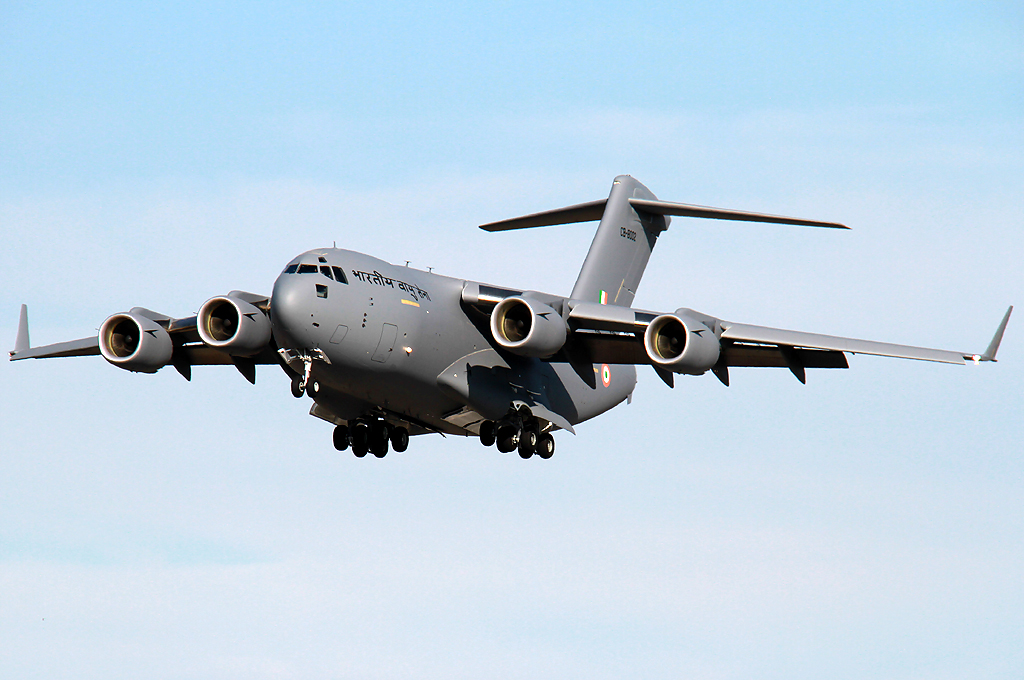
2nd Indian Air Force (IAF) C-17A takes to the skies again


The 2nd C-17A (F-258) CB-8002 destined for the Indian Air Force (IAF) has been flying each day this week. I was very happy to shoot this beautiful bird once again in gorgeous afternoon sun.
 
(Photos by Michael Carter) 

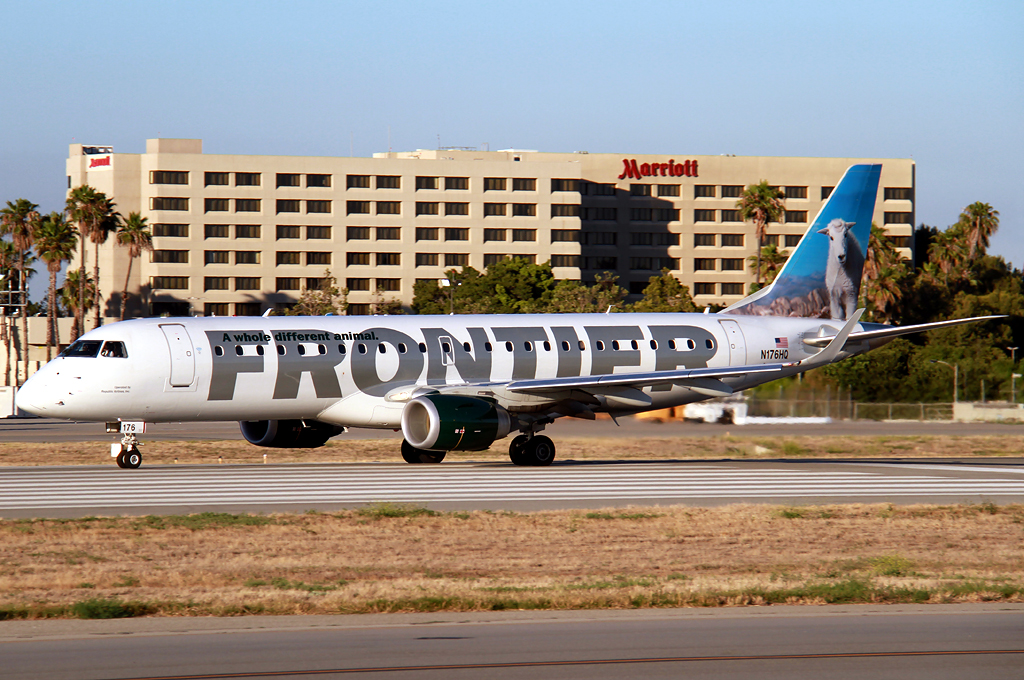
Frontier Embraer ERJ-190 at Long Beach Airport

 
Short final to Rwy 30.
 
Rolls for departure on a simply gorgeous evening in SoCal.
 
Frontier Airlines (Republic Airlines) Embraer ERJ-190-100IGW / 190AR (c/n 19000461) N176HQ arrived from Bob Hope Burbank Airport (BUR/KBUR) at 17:58 pst as "RPA6441," departing at 19:11 pst as "RPA5908" bound for Bullhead City - Laughlin International Airport (IFP).
 
(Photos by Michael Carter)

Tuesday, June 25, 2013

Mexican G650

Gulfstream G650 (c/n ?) XA-BAL is captured on the Gulfstream service center ramp on June 25, 2013. This is the first G650 to be registered in Mexico.
 
(Photo by Michael Carter)

Monday, June 24, 2013

New G650 arrives at Long Beach

Gulfstream G650 (c/n 6053) N653GA arrived at Long Beach Airport (LGB/KLGB) at 14:27 pst as "N653GA" following a flight from Savannah-Hilton Head International Airport (SAV/KSAV).

(Photo by Michael Carter)

Second Indian Air Force (IAF) C-17A takes to the skies at Long Beach Airport

Indian Air Force (IAF) C-17A (F-258 / IAF-2) CB-8002 is captured arriving back at Long Beach Airport (LGB/KLGB) on June 24, 2013 following a pre-delivery test flight.
 
(Photos By Michael Carter)