Thursday, July 11, 2019

Ryanair sees risk to 2020 growth if 737 MAX grounded beyond November

The boss of Europe's Ryanair warned on Wednesday the impact of the prolonged grounding of Boeing's 737 MAX on the airline's growth plans may start to spill over to next summer if the airplane is not flying again by November.

Europe's largest budget carrier needs up to eight months to take delivery of some 50 newly built planes left at the factory by the grounding crisis, so it may have to trim its capacity growth plans for summer 2020 if 737 MAX flights have not resumed by November, Chief Executive Michael O'Leary told Reuters.

"Boeing are telling us at the moment they expect to be back flying by the end of September," O'Leary said in an interview on the sidelines of a meeting of the European airlines lobby A4E, which he also chairs.

"I think it will fly before the end of this year. I am not sure they will meet the end of September date, but I take comfort from the fact that it seems that now the American, European, Brazilian and Canadian regulators are working together," he added.

In May, O'Leary predicted a return to service by July but the U.S. Federal Aviation Administration has since reported a new potential safety risk that it says must be addressed first.

"We are continuing to engage with global regulators and providing information to them as we work towards the safe return to service for the MAX," a Boeing spokesman said by email.

Boeing's top-selling jet was grounded in March in the wake of crashes in Ethiopia and Indonesia which killed 346 people. The planemaker is working on a software fix that people familiar with the matter have said Boeing hopes to present to regulators in September.

"The challenge for us is that we need to see the plane back flying by the end of September, October, November at the latest, so as not to disrupt our growth for the summer of 2020," O'Leary said.

Ryanair can take delivery of no more than six to eight planes a month because of the complexity of the delivery process and the availability of trained MAX pilots.

"PRESSURE" ON BOEING AFTER IAG DEAL

O'Leary also responded to a surprise move by British Airways owner IAG to buy 200 MAX jets at what analysts say must have been very attractive prices as the grounding drags on.

He described the preliminary order, which gave the 737 MAX a boost at last month's Paris Airshow, as a "great move" by IAG Chief Executive Willie Walsh, even though at this stage the deal is only a letter of intent (LOI).

"Let's see what happens with that. I suspect it certainly puts more pressure on Airbus. And we, as a result of IAG’s LOI, are putting much more pressure on Boeing."

Ryanair benefits from a clause in its contract guaranteeing it lower prices than its competitors, echoing a similar arrangement for Southwest in the United States, analysts say.

Asked whether Ryanair could take advantage of the IAG deal to expand its order for 135 MAX on even better terms, O'Leary said any new deal would be unlikely during the grounding but could be up for discussion once the jet was back in service.

"You could do that in September or October this year when the aircraft is back flying. We will stick close to Boeing on it and we are also talking to Airbus about the possibility of aircraft for Laudamotion."

O'Leary told Reuters in March, shortly before the second crash that triggered a worldwide grounding of the 737 MAX 8 and 9 models, that Ryanair was interested in Boeing's larger 737 MAX 10 "at the right price" as well as at least 100 Airbus A321 for recently acquired Austrian unit Laudamotion.

O'Leary said in May Ryanair was also talking to Boeing about compensation for the grounding, but that it had to be determined whether this would be paid in cash or as lower aircraft prices.


 (Reporting by Tim Hepher - Reuters)

Boeing's 737 program leader to retire

The head of the Boeing Co.’s troubled 737 jet program will retire from the company in the coming weeks.

Eric Lindblad, who has led the 737 program for less than 12 months — brought in last year to lead it when the company's biggest concern was ironing out supply chain issues — will depart after 34 years with Boeing.

Those concerns were soon overshadowed, however, by two deadly crashes of the jet in five months.

The CEO of Boeing Commercial Airplanes, Kevin McAllister, notified employees of the change in a memo provided to the WBJ by the company following initial media reports Wednesday afternoon.

“I have admired Eric’s resolve and drive, and we are grateful for his service and dedication,” McAllister said, adding that Lindblad had already expressed a desire to retire last year.

The 737 MAX, Boeing’s fastest-selling aircraft ever, has been grounded since the middle of March.

Lindblad will be succeeded as the head of the 737 program by Mark Jenks, who had previously been leading the company’s development efforts of a potential new mid-market airplane (NMA).

“He will work closely with Eric over the next several weeks to ensure a seamless transition as we approach the safe return to service of the 737 MAX,” McAllister said.

Mike Sinnett, vice president of product strategy and future airplane programs for Boeing, will take the lead on NMA.

Wichita’s largest employer, Spirit AeroSystems Inc., builds around 70 percent of the structure on the 737.

While Spirit continues to build on the program at the rate of 52 aircraft per month, Boeing has trimmed its own monthly output on the 737 to 42 jets. Spirit is holding the excess components in inventory and still being paid by Boeing for the work.

Not all of the 737s still being delivered are MAXs, though the new variant was expected to account for around 90 percent of program deliveries this year.

Boeing has halted its own MAX deliveries to airline customers amid the grounding, which stretches on without a known timeline for when regulators expect to sign off on Boeing’s proposed upgrades and return the jet to service.

Company CEO Dennis Muilenburg confirmed last month at the Aspen Ideas Festival that some employees had either been fired or reassigned due to the MAX crisis, though he declined to elaborate beyond describing them as “personnel changes” in an on-stage interview with Axios.


(Daniel McCoy - Wichita Business Journal)

Air China plans to buy 20 A350-900 aircraft from Airbus

Air China, China's flagship carrier, will buy 20 A350-900 jets from Airbus worth $6.54 billion based on list prices, the carrier said on Thursday.

Air China, which has 10 of the fuel-efficient widebody aircraft in its fleet already, said the deliveries were scheduled from 2020 to 2022.

It was not immediately clear if the order would bolster the Airbus order book or if it had previously been attributed to an unidentified customer. Airbus did not respond immediately to requests for comment.

A fresh order would help Airbus narrow a deficit in wide-body orders against Boeing as trade tensions persist between the United States and China.

Boeing won a positive total of 61 wide-body orders in the first half this year against Airbus' negative tally of 35 jets, meaning the European company had more cancellations than orders for twin aisle aircraft in the period.

Air China said it has the right to swap 5 out of 20 jets for the larger A350-1000.


 (Stella Qiu and Se Young Lee and Tim Hepher - Reuters / Yahoo Finance)

Sunday, July 7, 2019

Boeing’s 737 Max woes just cost it a $5.9 billion order

The Boeing 737 Max hasn’t been taking off, neither literally nor figuratively. The jets have been grounded worldwide since this spring after two fatal crashes—one last October in Indonesia, and another in Ethiopia in March—that killed 346 people and raised serious questions about the plane’s features.

Now, Boeing is facing cancellation of a lucrative contract to sell 20 Max 737s to a Saudi Arabian airline, signaling that the company’s troubles are far from over.

Boeing announced on Sunday that Flyadeal, a subsidiary of state-owned Saudi Arabian Airlines, canceled a provisional order for 20 of its Max 737 jets over concerns about Boeing’s ability to deliver the planes in timely fashion. “We understand that flyadeal will not finalize its commitment to the 737 MAX at this time given the airline’s schedule requirements,” a Boeing spokesperson said, according to Reuters.

The deal would have earned the company billions of dollars. The list price for the 20 Max 737s, each of which costs about $117 million, would normally run $5.9 billion, though Flyadeal would have gotten an undisclosed discount.

Boeing’s loss is Airbus’s gain. The budget Saudi airline is going instead with the Airbus 320. Flyadeal announced in a statement today that it will run an all-Airbus 320 fleet in the future and expects to add 30 such jets to its current collection by 2021, Reuters states.

Meanwhile, Boeing is trying to pick up the pieces after a disastrous year. Last week, the company announced that it would pay out $100 million to a fund for families of victims of the crashes, separate from any lawsuits over the matter. The fund would to support ”education, hardship and living expenses for impacted families, community programs, and economic development in impacted communities,” according to a statement by Boeing CEO Dennis Muilenberg. He apologized to the victims’ families, saying, “We at Boeing are sorry for the tragic loss of lives in both of these accidents and these lives lost will continue to weigh heavily on our hearts and on our minds for years to come.”

In June, ahead of the Paris Air Show, Muilenberg admitted for the first time that his company mishandled concerns over its 737 Max aircraft and that mistakes were made in how it communicated about the planes, especially after the accidents. He said that Boeing is focused on rebuilding trust after the crashes, which he called a “defining moment” that will result in a “better and stronger” organization. He noted, too, that he didn’t expect to see many orders for 737s at the air show but expected global aviation regulators to allow the plane, grounded since March, to fly again before the end of the year.

On June 18, things seemed to be looking up for Boeing. IAG, which owns British Airways, signed a letter of intent to purchase 200 Max 737 jets from Boeing. It wasn’t a firm deal but was widely seen by industry insiders as a vote of confidence and a sign that the company would soon recover from its recent woes. “We have every confidence in Boeing and expect that the aircraft will make a successful return to service in the coming months having received approval from the regulators,” wrote IAG CFO Enrique Dupuy de Lôme in the letter.

But it seems that this confidence isn’t shared by all, as evidenced by the Flyadeal cancellation. In April, Boeing had said it would slow production of 737s, scaling back from 52 to 42 jets per month. Judging from the recent news, the slowdown was merited.
 

(Ephrat Livni - Quartz)

Friday, July 5, 2019

Southwest Air’s Paint Guru Keeps 750 Airplanes Looking Sharp

(Photo - Southwest Airlines)

Before Corey Culbertson boards a Southwest Airlines airplane, he stops at the boarding door to look at the blue, red, and orange heart logo to his right, checking whether it’s as shiny and crisp as the day it left the paint shop.

Next, as he takes his window seat near the wing, he scrutinizes the aircraft’s engines to see if they’ve retained their blue sheen and ensure they’re not scuffed or weathered. If he doesn’t like something, he writes down the aircraft’s registration number and follows up in the office.

“I don’t announce what I am doing,” he said. “I try to look nonchalant when I’m doing it. I just want to make sure our fleet looks good.”

Culbertson has one of the more niche jobs at an airline. He’s senior manager of airframe field services, and among other tasks, he is Southwest’s paint guru, in charge of scheduling Southwest’s roughly 750 airplanes for repainting.

Usually airplanes get a full exterior makeover once every eight years, but if something’s not looking right, Culbertson can slot one airplane over another or schedule a touch-up, which is why he looks so closely when he flies.

“What does the customer see when he’s looking at the gate?” Culbertson said. “Around the door, you want it to look nice. The engines should look good, the wings should look good. You want the customers to see a plane that looks good and not one that is old and worn out.”

Peeling paint is not a safety issue, and some airlines have more tolerance for it than others. But in the age of Instagram, with passenger posting tens of thousands of wingtip pictures at 35,000 feet, most major airlines like to keep airplanes looking sharp. They view them as a billboard that travels the country or world, advertising the brand.

At Southwest, which introduced a new look in 2014, what’s on the airplane is as important as the website or airport signage, spokesman Dan Landson said.

“We want to make sure that it looks clean and crisp so folks can put their trust on us,” Landson said.


Tough To Keep Planes Looking Good

It’s not easy to keep an airplane that flies five or six legs per day looking fresh.

Airplanes fly at 30,000 feet or higher, and they get a beating from the sun’s ultraviolet rays, which can make paint fade, Culbertson said.

Plus there’s normal wear and tear, as well as consequences of maintenance visits. When something is wrong with an aircraft, technicians can be more interested in fixing it than maintaining the integrity of the paint.

Southwest is considering painting planes more often that once every eight years, because after about five, passengers may notice imperfections.

“After a while the paint fades,” Culbertson said. “The paint chips off or the paint peels off. It just starts looking bad.”
 

Intricate Process

Southwest’s paint vendor, International Aerospace Coatings, can paint two planes at one time — one in Victorville, Calif., and the other in Spokane, Wash.

But the process takes about eight days, and Southwest, like other airlines, cannot always afford to take planes from service. This summer, with its 34 Boeing 737 Max airplanes grounded, Southwest needs every airplane it has, so it has suspended painting, Landson said. It expects to resume in the fall, when demand for travel falls.

For now most planes that go into paint are transitioning to Southwest’s newish look. While some airlines accelerate painting when they introduce a new livery, Southwest kept its regular schedule, so about a quarter of the fleet still has the pre-2014 paint job. Once the last plane gets the new scheme, likely in a couple of years, Southwest will begin repainting the first airplanes that got it.

In the painting process, the most labor-intensive period is the four to five days of preparation, Culbertson said. About a dozen workers strip the fuselage to the bare metal and then clean it, getting it ready for primer and paint. They also scuff the wings and most composite surfaces, taking the sheen off, so paint will stick. In addition they mask off the windows, ensuring they’re free from errant paint.

Four workers usually paint the airplane, Culbertson said, using spray paint, with each handling a quarter of the airplane. They’re assisted by four spotters, who, among other tasks, ensure the paints don’t mistakenly damage the aircraft when they move their lifts.

For a Boeing 737-700, which seats 143 passengers, the contractor uses about 51 gallons of paint, Culbertson said. He declined to share how much it costs to paint one plane, citing contract confidentiality. But it’s not cheap.


Special Considerations


Southwest Airlines introduced Florida One in 2010.

Before Culbertson joined Southwest six and a half years ago, he worked for an aircraft painting facility that did contract work for American Airlines.

Then American was transitioning to a new look, with an intricate red, white, and blue tail. It’s so challenging to paint that when US Airways executives took over American in 2014, management considered scrapping the design on the tail for American’s old logo.

“There was a lot of skepticism on that,” Culbertson said. “We were all curious how that would work.”

American figured it out as Culbertson moved to Southwest, where the regular paint job is not as complicated. But it also has its challenges, he said.

The biggest is the multicolored heart logo. Southwest has two on the new livery, one on the belly and the other near the passenger-boarding door. It takes one person six to eight hours to paint a heart, he said, mostly because the worker must wait two hours for each color to dry before starting the next.

Still, that’s easy to compared to some of Southwest’s special paint jobs. The airline has a series of planes with unique designs, many dedicated to a U.S. state, like California One, Illinois One, Maryland One, and Missouri One.

All take a dozen days to paint, Culberston said, as they’re typically more ornate than the regular scheme. But only one is far more difficult than the rest, he said.

“It’s the Florida One, 945,” he said, using the aircraft’s registration number, N945WN.

It’s an aircraft emblazoned with the state seal, and according to the airline, it features a “Seminole woman, hibiscus flowers, Sabal palms [one of the state trees], and a steamboat.”

What’s the issue?

“It has a lot of different colors, that’s it,” Culberston said. “It’s just a lot of prep work.”

(Brian Sumers - Skift)

Tuesday, July 2, 2019

Bombardier Unveils New Learjet 75 Liberty

Bombardier expects to begin deliveries of its new Learjet 75 Liberty in 2020.
(Photo by Bombardier)


Bombardier today announced the Learjet 75 Liberty as its newest offering in the storied business jet brand. It’s “a rescoped aircraft that’s going to be cost-competitive from an operating cost perspective but also purchase cost perspective with Part 23 light jets,” Bombardier Business Aircraft spokesman Mark Masluch told AIN. To accomplish this, the Liberty will have fewer seats and options than the original Learjet, shaving about $3 million off the price tag while keeping the performance, the Canadian airframer said.

Bombardier hopes the lower price tag will drive a new segment of buyers to the Wichita-assembled aircraft, which has seen steadily declining deliveries over the past five years to just a dozen last year, according to data from the General Aviation Manufacturers Association.

At $9.9 million, the Liberty sheds two seats in the forward cabin—for a total of six seats—replaced by two fold-down ottomans and fold-out tables, creating what it calls the “executive suite” for the two remaining seats in the forward section of the cabin, which is separated from the cockpit by a sliding pocket door. In the aft cabin, the four remaining seats are placed in a club configuration.

“You’re getting a light jet that not only flies faster, flies farther but [also] has the largest seated room in the cabin [in the light-jet category],” Masluch added.

The jet retains its 51,000-foot ceiling and its two Honeywell TFE731-40BR engines, each with 3,850 pounds of thrust. High-speed cruise remains Mach 0.79 but range improves by 40 nm to 2,080 nm with NBAA IFR reserves. Also standard on the Liberty is the Bombardier Vision flight deck with the recently announced upgrade to the jet's Garmin G5000 avionics, as well as Gogo ATG 4G wireless connectivity. Deliveries are expected to begin in 2020.

What was standard on the Learjet 75 will be optional on the Liberty, such as the APU and external lights, Masluch explained. “It’s a little bit more flexible approach to the program that allows us to get in the price range to more directly compete with light jets in the Part 23 realm,” he said, noting that the Liberty will retain the Learjet 75’s Part 25 certification.

Liberty essentially replaces what the market has known as the Learjet 75. Customers who would want a Learjet 75 would simply order the options that come with the Liberty, as well as an eight-seat cabin.

“Having a product that’s competitive and aligned with market demand is going to really help stabilize the long-term manufacturing part of the Wichita site,” Masluch added. “This really kind of provides a lot of leg room in terms of our production capacities for Learjet aircraft with a product that’s rightly scoped for the market and competes more directly with light jets that are Part 23 certified.”
 

(Jerry Siebenmark - AINOnline News)

No recovery in sight for air cargo

The latest figures from WorldACD do not offer any hopes for a recovery in air cargo growth this year, according to the analyst.

Figures show that the total chargeable weight of cargo decreased by 5% year on year in May, whilst yields in US dollar terms were down 5.6% on a year ago.

WorldACD said that the year-on-year decline for May was slightly better than the April figure, but was still behind the figure for the first four months of the year.

The analyst said: “Not a single region escaped the trend: the origins Africa and Europe suffered least, with YoY volume drops of 2.2% and 2.4% respectively, but the origins Asia Pacific and North America chalked up YoY losses of -7.0 % and -7.2 % respectively. Latin America and the Middle East & South Asia (MESA) could not buck the trend either (-4% and -3.4%).”

General cargo for May was 7.2% behind a year ago, while special cargo was 0.1% behind. High-Tech & Other Vulnerable Goods, the largest category special cargo, increased by 5.3% year on year , whilst the second largest category, Pharma & Temperature Controlled Goods, rose by 9.9%.

The cargo load factor dropped 2.1 percentage points compared with a year earlier.

However, the analyst did find some good news when it compared 2019 to 2017.

“To end on a slightly more optimistic note, let’s join the people who find that a comparison with 2017 is more ‘realistic’ than a comparison with 2018, given last year’s ‘extreme’ growth figures,” WorldACD said.

“Compared with Jan-May 2017, the year 2019 so far shows worldwide growth of +1%. Moreover, 22 of the 40 largest air cargo countries in the world show positive growth for the same period. The growth percentages between 2017 and 2019 range from 32.6% for Chile to 0.1% for India.

“This group of growth countries consists of four countries from South America (Chile, Ecuador, Brazil, Colombia), nine countries from Asia & Pacific (Vietnam, Pakistan, Australia, Indonesia, the Philippines, Sri Lanka, Singapore, Malaysia, India), five European countries (Norway, Turkey, UK, Switzerland, Luxemburg), the 3 North American countries Canada, Mexico, USA, and one African country (South Africa).”


(AirCargoNews)

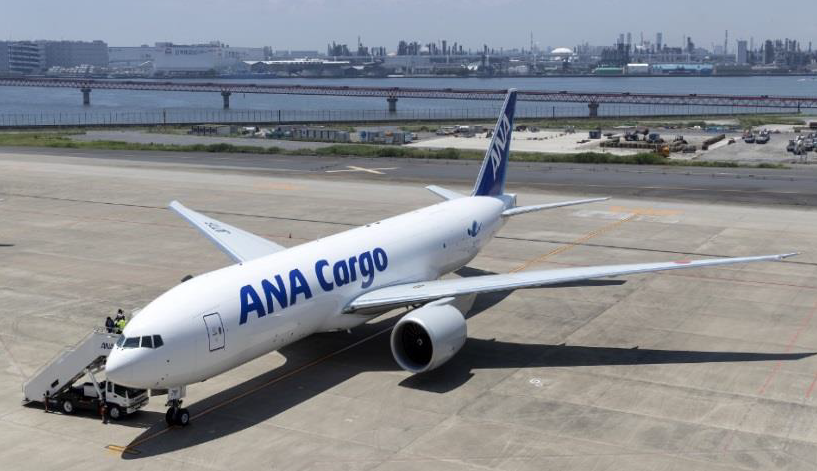
ANA Cargo becomes the first in Japan to launch B777F services


ANA B777F

All Nippon Airways (ANA) has added its first Boeing 777F to its fleet – becoming the first airline in Japan to offer the widebody freighter.

The airline took delivery of the aircraft, nicknamed Blue Jay, on May 24 but its first commercial flight is due to take place today.

The B777F will operate on a Narita-Kansai-Shanghai loop five times per week. From August 26 Kansai will be dropped from the operation.

Then, from October 27, the B777F aircraft will be operated on transpacific flights from Narita to Chicago O’Hare.

The aircraft is one of two ordered in March 2018 and is the culmination of expansion plans announced in 2018 as it responds to the expanding market in Asia, China and North America, where the airline expects growth to continue in the medium and long term.

“The Boeing 777F aircraft elevates the ANA fleet to a new level,” said Toshiaki Toyama, President of ANA Cargo INC. “These 777Fs are significantly larger than the Boeing 767F models used to ferry cargo in Asia, giving ANA additional flexibility in how the aircraft are used. The aircraft will aid in the expansion of ANA’s services to include a whole new set of customers and increase ANA’s ability to safely transport larger cargo.”

At the moment, the airline operates with a fleet of 12 B767-300 freighters.

ANA currently centres its Asian flight network around the Okinawa freight hub and is planning to expand its network in North America this year with the addition of large-scale cargo flights complementing its current passenger air travel options.

Furthermore, ANA is providing bespoke service for delicate cargo being transported by its Boeing 777F aircraft. This service offers an additional layer of protection to fragile cargo, such as semiconductor manufacturing equipment and medical equipment. ANA is also offering a unique service that will allow for the transportation of a variety of vehicles ranging from compact cars to SUVs.

“The addition of the Boeing 777F aircraft will increase ANA’s ability to provide top-of-the-line service to its customers,” the airline said. “As the first Japanese airline to make use of the freighter, ANA is equipped to meet emerging customer needs while providing hassle-free transportation options for all cargo no matter its size or composition.

“As ANA’s international cargo operation grows to include North America, the carrier is committed to bringing the same level of service and convenience that has made it a leader in both Asian cargo transportation and international passenger air service.”


(AirCargoNews)

Wednesday, June 19, 2019

Captain 'Sully' Sullenberger has a message for Boeing about its 737 Max

Chesley “Sully” Sullenberger, the decorated commercial airline captain responsible for saving the lives of 155 people in a heroic 2009 landing on New York’s Hudson River, has a message for Boeing and the Federal Aviation Administration: pilots need robust training before the 737 Max returns to the skies.

“Reading about it on an iPad isn't even close to sufficient,” Sullenberger testified during a congressional subcommittee hearing on Wednesday. He asserted that recertification should require simulator training, which subjects pilots to conditions that closely emulate those in flight.

“We should all want pilots to experience these challenging situations for the first time in a simulator and not in flight with passengers and crew on board,” Sullenberger said.


More time and costs before the Max can fly?

Exactly how much and what type of pilot training is needed before Boeing’s Max can be re-certified by the FAA and returned to service has been a topic of debate, as some aviation experts point to a lack of sufficient training concerning the Max systems as a central cause in the cascade of events that led to two fatal Max aircraft crashes within five months. Meanwhile, others claim more experienced pilots would have averted crisis. Simulator training, estimated to cost hundreds of dollars per hour, if required by the FAA, will add time and cost to the Max’s return to flight.

“We must face [the emergency] first-hand in a simulator before we experience it in flight,” Sullenberger told lawmakers.

As a result of the crashes, Boeing agreed to modify all Max planes in order to feed additional sensor data into a system designed for the aircraft called MCAS, or Maneuvering Characteristics Augmentation System. The system, which automatically pushes the nose of the plane down to prevent engine stall, is known to have been activated in both the Lion Air and Ethiopian Airlines crashes that killed all passengers and crew on board.

The importance of the ‘startle factor’

Throughout his testimony, Sullenberger emphasized the significance of pilot “startle factor” and chaotic cockpit situations that play into a pilot’s emergency response capabilities.

Asked by Rep. Thomas Massie (R-KY) whether more experienced pilots would have been able to handle the MCAS-related emergencies, Sullenberger opined that it would have been unlikely they would have performed differently than the crews on the accident flights.

“I'm one of a relatively small group of people who have experienced such a crisis and lived to share what we learned about it. I can tell you firsthand that the startle factor is real. And it's huge. It absolutely interferes with one's ability to quickly analyze the crisis and take an active action,” Sullenberger said. “In both 737 max accidents, the failure of a single angle of attack sensor quickly caused multiple instrument indication anomalies, and sudden, loud, and in some cases, false warnings, creating major distractions masking the cause, and would have made it even harder to quickly analyze the situation and take effective, corrective action.”

Captain Dan Carey, Allied Pilots Association president and veteran commercial aircraft pilot, seconded Sullenberg’s position.

“This is a sudden, violent, and terrifying event,” Carey testified. “So airplanes pitching up and down rapidly and violently. There's bells, warnings, and clappers sounding. Communication is difficult.”

Carey blamed Boeing for prioritizing costs over safety.

“The Max was designed to provide the same aircraft feel as the 737. This was intended to minimize costs to Boeing's customers by allowing the Max to be certified as a 737-type aircraft. This led Boeing engineers to add the MCAS system,” he said. “Boeing failed to disclose the existence of the MCAS system to the pilot community around the world. The final fatal mistake was therefore the absence of a robust pilot training in the event of an MCAS failure.”

Boeing CEO Dennis Muilenburg has suggested a less aggressive approach than simulator training.

“We believe that the right answer right now is computer-based training,” Muilenberg told shareholders during Boeing’s annual meeting in April. “And then as part of the recurring training that pilots might do downstream, give them options for simulator training.”

Ultimately, the decision on requisite training rests with FAA regulators.

In response to whether Boeing’s position on flight training had changed since Muilenberg’s statement in April, a company spokesperson told Yahoo Finance, “Boeing continues to work with global regulators and our airline customers as they determine training requirements.”

Regarding the timeline for the Max to return to service, Boeing’s spokesperson said, “We have not given a timeline — safety is our priority and is the primary driver in the process. We have finalized the software update and the next step will be to finish certification work in the simulators ahead of the certification test flights, which will be scheduled with the FAA.”


(Alexis Keenan - Yahoo Finance News) 

IndiGo drops Pratt for CFM's jet engines in $20 billion order

India's biggest airline IndiGo said on Monday it had placed a $20 billion jet engine order from CFM International, a move that marks a shift away from Pratt & Whitney towards its French-American rival.

CFM, owned by General Electric and France's Safran, will provide the 1LEAP-1A engines to power 280 A320neo and A321neo jetliners already on order from Airbus by the Delhi-based budget carrier.

IndiGo has an order book of 430 Airbus planes of the A320neo family, of which the first 150 aircraft were to be powered by engines from United Technologies Corp's Pratt & Whitney.

Reuters reported earlier in June that IndiGo had chosen CFM over Pratt for what was one of the largest jet engine orders and that the deal would be for more than 600 engines, including spares.

Although the Pratt engines fitted on the A320neo aircraft are fuel-efficient there have consistently been issues with them since they entered into service in 2016, forcing IndiGo to ground its planes several times.

"The CFM LEAP engine will allow IndiGo to maintain its strong focus on lowering operating costs and delivering fuel efficiency with high standards of reliability," Riyaz Peermohamed, Chief Aircraft Acquisition and Financing Officer at IndiGo, said in the statement.

The delivery of the first LEAP-1A-powered A320neo is scheduled in 2020, IndiGo said in the statement, adding that the contract with CFM includes spare engines and an overhaul support agreement as well as a long-term service agreement.

CFM introduced its LEAP engines in India around 2016. It currently has 60 such engines operational in the country.


(Promit Mukherjee and Aditi Shah - Reuters)

Boeing lines up 787 Dreamliner deals at Paris Air Show

Korean Air Lines and a top aircraft leasing company signed tentative deals to acquire 35 Boeing 787 Dreamliner wide-body jets at the Paris Air Show.

Boeing said Tuesday that Korean Air signed a commitment to buy 10 787-10s and 10 787-9 model airplanes, worth $6.3 billion at current list prices. Korean Air will lease 10 more 787-10s from lessor Air Lease Corp, Boeing said in a news release.

In a separate Boeing deal, Air Lease committed to acquire five 787-9 Dreamliners, worth $1.5 billion at list prices.

"Demand for reliable, versatile, and fuel-efficient airplanes is at an all-time high," Air Lease Executive Chairman Steven Udvar-Házy said.

Boeing said it will add the jets to its official order backlog once the airline and lessor pay deposits on the jets and finalize a contract.

Korean Air, the country's flagship airline which serves Seattle, is one of the largest transpacific carriers in Asia with 16 nonstop routes to North America.

"As we continue to innovate our product offering, the 787 Dreamliner family will become the backbone of our long-haul fleet for many years to come," Korean Air Chairman Walter Cho said.

The 787-10 Dreamliner boasts 25 percent improved fuel efficiency and has about 15 percent space for passengers and cargo than the 787-9s.

"The airline has been a pioneer in Asia's commercial aviation industry over the past five decades and Boeing is honored to play an important role in their continued success," Boeing Commercial Airplanes President and CEO Kevin McAllister said.

Korean Air operates 96 Boeing passenger airplanes, including Next-Generation 737, 747, 777 and 787 jets. Its cargo fleet includes 747 and 777 freighters.

If finalized, the order will quadruple the airline's 787 fleet to 40 airplanes as it modernizes and strengthen its long-haul aircraft fleet. Korean will introduce the 787-10 to complement its existing long-haul fleet of 787-9s and 777s.


(Andrew McIntosh - Puget Sound Business Journal) 

Tuesday, June 18, 2019

British Airways' parent company signals intent to buy 200 Boeing 737 Max

While hundreds of Boeing 737 Max jets languish on the ground, British Airways’ parent company has signed a letter of intent for 200 of the aircraft.

The planemaker’s latest short-haul jet has been grounded since March following two fatal crashes.

A total of 346 people died when Boeing 737 Max jets belonging to Lion Air and Ethiopian Airlines crashed shortly after take-off.

In both cases, an anti-stall system known as MCAS forced the nose of the aircraft downwards despite the pilots’ best efforts to fight it.

Boeing is working on software and training updates, but at present there is no certainty about when the plane may fly again.

At the Paris Air Show this week, British Airways’ parent company, IAG, said it wanted to buy 200 of the planes.

Subject to a commercial contract, the mix of 737 Max 8 and 737 Max 10 aircraft would be delivered between 2023 and 2027.

IAG said: “It is anticipated that the aircraft would be used by a number of the Group’s airlines including Vueling, Level plus British Airways at London Gatwick airport.”

At present BA flies no short-haul Boeing aircraft. The fleet at Gatwick and Heathrow is all Airbus A320 series.

Willie Walsh, IAG’s chief executive, said: “We’re very pleased to sign this letter of intent with Boeing and are certain that these aircraft will be a great addition to IAG’s short-haul fleet.

“We have every confidence in Boeing and expect that the aircraft will make a successful return to service in the coming months having received approval from the regulators.”

The biggest operators of the 737 Max in the UK are TUI Airways, Norwegian and Ryanair.


(Simon Calder - The Independent) 

Amazon to lease 15 more Boeing 737-800s through GECAS, to support one-day shipping

Amazon Inc. said Tuesday it will lease 15 737-800 cargo aircraft made by Boeing through a partnership with General Electric Co.'s GE Capital Aviation Services (GECAS).

The 15 aircraft will be in addition to the five Boeing 737-800s already leased from GECAS, announced earlier this year. "These new aircraft create additional capacity for Amazon Air, building on the investment in our Prime Free One-Day program," said Dave Clark, senior vice president of worldwide operations at Amazon.

"By 2021, Amazon Air will have a portfolio of 70 aircraft flying in our dedicated air network." Amazon's stock rose 0.9% in pre-market trading, while Boeing shares climbed 1.3% and GE's stock tacked on 0.9%. The shares gains come as futures for the Dow Jones Industrial Average rallied 144 points.

(Tomi Kilgore - MarketWatch)

Thursday, June 6, 2019

Elan Express Boeing 767-24Q(ER) (28270/629) N767CJ

Arrived from Los Angeles International Airport (LAX/KLAX) as "ELX1086" following a short 15 minute flight touching down at 17:48 PDT on Rwy 30 at Long Beach Airport (LGB/KLGB) this evening (June 5, 2019).

She is sporting a special Drake Air livery in support of Canadian musician Drake (Don't know if he was on board) who is using the aircraft as his VIP transport during his current tour.

Interestingly the aircraft did not park at the terminal nor an FBO but on taxiway Alpha by the location of the old Douglas commercial blast fence and where more recently the Virgin Orbit 747 had been parking.


This 767 is no stranger to Long Beach as she has been here numerous times over the years when operating with Mid East Jet her original owner as N767KS.

She made her first flight from Everett-Paine Field (PAE/KPAE) on September 20, 1996 and was delivered to the carrier on October 4, 1996.

On August 18, 2018 she was ferried from Erfurt (ERF/EDDE) to Hamilton John C. Munro International Airport (YHM/CYHM) on delivery to Elan Express as N767KS, later being re-registered to her current N767CJ registration on April 18, 2019.


(Photos by Michael Carter / Aero Pacific Images)

Wednesday, May 22, 2019

Coulson Flying Tankers brings Martin Mars to Long Beach

Back in June 1997, Coulson Flying Tankers brought Martin JRM-3 Mars (c/n 9267) C-FLYL "Hawaii" down to Long Beach and landed in the channel next to the Queen Mary.

At the time the company I believe was trying to win a fire fighting contract with either Los Angeles County or CAL Fire for the upcoming fire season and Long Beach Harbor was the best location for the aircraft to demonstrate her capabilities.

In the second photo, you can see Consolidated PBY-5A Catalina (c/n CV-560) N322FA "Scarlet" in the distance behind the Martin Mars operated by Airborne Fire Attack who was also performing demonstration flights for both fire agencies. The company was local with the PBY being based at John Wayne Orange County Airport (SNA/KSNA).

Sadly the aircraft was written-off a short time later on August 1, 1997 on San Vicente Reservoir in San Diego County. The crew was performing a water scoop and while doing so the nose gear doors opened causing the aircraft to flip. Both pilots were injured but survived the accident.

(Photos by Michael Carter / Aero Pacific Images)

(Kodachrome K64 Slides)

VASP MD-11 (48413/488) PP-SOW

Captured on short final to Rwy 24R at Los Angeles International Airport (LAX/KLAX) on November 10, 1997.

Delivered to the carrier on Valentines Day February 14, 1992, she served with the carrier until finding her way to Varig as PP-VQL on May 12, 2000.

Following her conversion into a cargo aircraft in 2005, she went into service with Lufthansa Cargo as D-ALCO flying for the German carrier until being WFU on December 21, 2013.

Ferried to Tulsa International Airport (TUL/KTUL) on January 23, 2014 she sat in storage until sadly meeting her fate and being broken-up at Tulsa sometime in 2014 from what info I can gather.

(Photo by Michael Carter / Aero Pacific Images)

(Kodachrome K64 Slide)

Monday, May 20, 2019

Southwest Airlines Boeing 737-5H4 (25318/2121) N519SW

Is captured sporting a special Christmas livery ***(Reindeer on aircraft nose and small Elf just behind forward door)*** in December 1991 at an unknown airport.

The aircraft was delivered new to the carrier on September 17, 1991. Following 21 years of service with Southwest Airlines she was retired on June 12, 2012 and has since presumably been broken-up.

(Photographer Unknown / Kodachrome K64 Slide)

(Michael Carter Slide Collection)

Thursday, May 16, 2019

Tao Domestic Airlines (TDA) MD-81 (48071/1004) JA8469

Deploys the thrust reversers as it arrives at Osaka - Itami International (ITM / RJOO) on April 4, 1982.

(Photo by K. Murai / Kodachrome K64 Slide)

(Michael Carter Slide Collection)

Monday, May 13, 2019

Air China Airbus A350-941 (c/n 217) B-1083 ex F-WZNU

Air China Airbus A350-941 (c/n 217) B-1083 ex Airbus F-WZNU, sports the special livery "Beijing Expo 2019" at Frankfurt Rhein-Main International (FRA / EDDF) following her arrival on an unknown date.

(Photo by Udo Schaefer / Fujichrome Provia 100 Slide)

(Michael Carter Slide Collection)

Emirates backs away from Boeing 787 Dreamliner

Emirates appears to have made good on speculation that it might scrap plans for an order for 40 787-10 Dreamliners from the Boeing Co.

According to the Emirates Group 2018-2019 annual report, the deal no longer appears among its fleet and future orders information as it did the previous year.

Bloomberg reported in February that Emirates was considering such a move in favor instead of potentially ordering more of Boeing's coming 777X.

The deal for the 787-10s, the largest variant of Boeing’s Dreamliner family, was worth $15.1 billion at list prices when it was announced at the Dubai Airshow as an order commitment.

However, the order was never announced as having been finalized.

Had it come to fruition, the order would have meant new production work in Wichita, where Spirit AeroSystems Inc. builds the complete forward fuselage and other components of the 787 for Boeing.

Still on the books at both Emirates and Boeing, however, is the carrier’s order for 150 777X and its options for 50 more.

Spirit builds the forward fuselage structure and other components on that aircraft.


(Daniel McCoy - Wichita Business Journal)